

Most Recent Issue: Volume 35, Issue 1
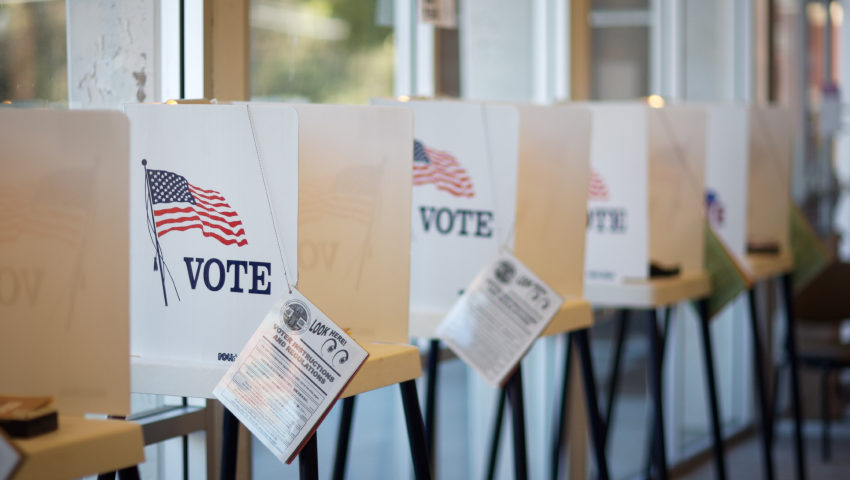
Certification and Non-Discretion: A Guide to Protecting the 2024 Election
Stanford Law & Policy Review
In the wake of the January 6, 2021 attack on the U.S. Capitol, lawmakers and advocates focused significant attention towards reforming the Electoral Count Act—an 1887 law that governs the counting of Electoral College votes in Congress. After almost two years, Congress passed reforms to the Act that will make…
Read MoreOnline Articles

Comment: Flexible Staffing: A Tangible Near-Term Move for U.S. Space Regulation’s Unclear Future
Stanford Law & Policy Review
The recent rapid growth of the commercial spaceflight industry in the United States has strained the current piecemeal federal regulatory oversight of spaceflight activities. A bipartisan desire to overhaul different regulators’ scope of authority has therefore emerged among policymakers, though a split has also arisen along party lines over preferred…
Read More
Stanford Law & Policy Review (SLPR) is one of the most prominent policy journals in the nation and informs public discourse by publishing articles that analyze the intersection of our legal system with local, state, and federal policy. SLPR is ideologically neutral and solicits articles from authors who represent a diversity of political viewpoints.
Founded in 1989 by Stanford Law School students, SLPR has long been a forum not only for academics but also for high-profile policymakers to publish articles on hot-button issues. Past contributors include Bill Clinton, Joseph Biden, John McCain, Charles Schumer, Charles Rangel, James Baker, Russ Feingold, and Jeb Bush. SLPR has been cited multiple times by the U.S. Supreme Court and over fifty times by other federal courts. It is published widely and available at all major law schools and policy think tanks.
We are delighted to announce that the Stanford Law & Policy Review is now being published online-only and does not require a subscription.
2023-2024 Leadership
Editors-in-Chief:
Leo Rassieur
Marissa Uri
Executive Editor:
Erica Robison
Managing Editors:
Whit Froehlich
Aidan Bryce
Lexi Curnin
Hector Reyes
Becca Zimmerman
Lead Article Editor:
William Weightman
Lead Notes Editor:
Joelle Miller
Lead Online Editor:
Makena Kauhane
Lead Symposium Editor:
Daniel Kim
Production Editor:
Dire Ezeh
Senior Editors:
John Garrison
Carlos Lapuerta
Adrian Javier Ito
Ebehi Izokun
Contact:
SLPR’s office is located in room 79G of the Stanford Law School building.
Phone: 650 723.2747
Fax: 650 724.5714
Email:
Leo Rassieur (lrass@stanford.edu)
Marissa Uri (muri@stanford.edu)
Mailing Address:
Stanford Law & Policy Review
Stanford Law School
559 Nathan Abbott Way
Stanford, CA 94305
Diversity
At its core, SLPR is devoted to the discovery and transmission of legal knowledge. SLPR cannot be limited in its methods and ways of thinking, or confined to one individual’s or a single community’s experiences. To further this mission, we must bring a broad range of ideas and approaches.
SLPR strives to ensure that a diversity of cultures, races and ethnicities, genders, political and religious beliefs, physical and learning differences, sexual orientations and identities is represented. Such diversity will inspire new angles of inquiry, new modes of analysis, and new solutions, contributing to our core mission.
To advance legal scholarship, it is essential to be exposed to views and cultures other than one’s own and to have one’s opinions and assumptions challenged. Such engagement expands our horizons, enables understanding across difference, prevents complacency and promotes intellectual breadth.
Our diversity ensures our strength as an intellectual community. In today’s world, diversity represents the key to excellence and achievement.